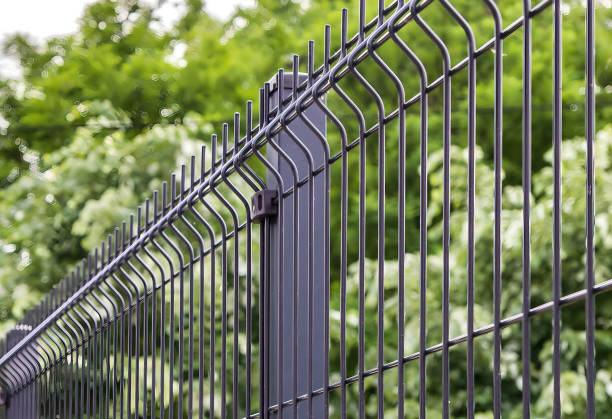
A useful site boundary is designed around events that could plausibly occur, not around a vague idea of danger. A retail loading yard, utility compound, warehouse and office campus hold different assets and attract different types of unwanted access. The starting point is therefore to identify what needs protection, who might try to reach it and what the consequences would be if the perimeter were crossed.
That exercise should include ordinary problems as well as deliberate intrusion. Trespass, theft, vandalism, accidental public access and vehicle entry may all be relevant. The perimeter barrier can then be specified to address those scenarios rather than chosen mainly for appearance or because the same product has been used elsewhere.
Map the perimeter as a series of approaches
Threats rarely arrive evenly from every direction. One boundary may face a well-used street with good lighting, while another backs onto vacant land, a laneway or neighbouring storage area. People approaching from those locations have different levels of visibility and different opportunities to test the perimeter without being noticed.
Walking the site can reveal issues that plans miss. Ground levels, vegetation, street furniture, adjoining walls and parked vehicles may create easier climbing points. Informal tracks can show where people already move. Looking from outside towards the property is particularly useful because it reflects the perspective of someone approaching the boundary rather than someone who already understands the site.
Match the barrier to the consequence
Not every edge needs the most resistant available treatment. Higher protection may be justified around valuable plant, hazardous materials or sensitive operations, while lower-risk areas may need a simpler boundary. A proportionate approach concentrates cost and attention where a breach would matter most.
Well-chosen security fencing also needs to fit its environment. Exposure to salt, dust, impact or vegetation can affect durability. Visibility may be more valuable than privacy in some areas, while screening may be important in others. The boundary should support surveillance and site use instead of creating blind spots or maintenance problems that weaken performance later.
Design gates around pressure points
Access points experience more stress than continuous fence lines because they combine security with movement. Deliveries may arrive in clusters, staff may enter during shift changes and visitors may need help before they are admitted.
Separating pedestrian and vehicle movement can reduce conflict where space allows. Queuing areas should also be considered so waiting vehicles do not block roads or force gates to remain open. The design needs to account for emergency access and authorised after-hours entry without making routine operation unnecessarily complicated.
Plan for people, maintenance and change
Even a strong perimeter depends on the people who operate it. Staff need clear procedures for faults, lost credentials, visitors and gates that fail to close. Contractors should know which areas are restricted and who can approve temporary openings. These processes help the physical design work as intended during busy periods.
Maintenance access must be practical too. Vegetation needs trimming, hardware needs adjustment and damaged sections need repair. If access for these tasks is difficult, small defects can remain for longer. Inspection routes should make it easy to see both sides of important boundary sections where possible.
Finally, real threats and site layouts change. New neighbouring development can increase foot traffic, a business may begin storing different goods, or an extension may move valuable assets closer to the perimeter. The security fencing that was appropriate when installed may need to evolve. Reviewing security fencing after operational changes keeps the design connected to current risk.
Designing around real-world threats does not mean predicting every possible incident. It means building from credible scenarios, understanding how the site can be approached and making sure barriers, gates, surveillance and procedures support one another. That creates a boundary that is practical enough to operate every day and strong enough to matter when it is tested.